


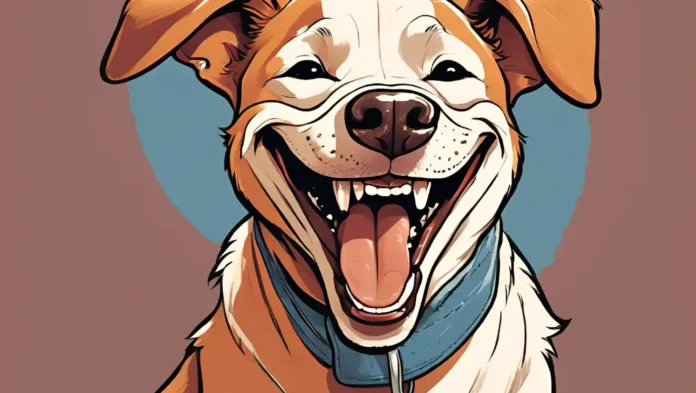

Yes, dogs can appear to smile, but their expressions don’t always mean happiness in the human sense. A relaxed mouth, open lips, and soft eyes often indicate comfort and contentment. Understanding dog facial expressions helps decode their emotions more accurately.
DoggyZine.com
Can dogs smile, or are we just imagining it? If you’ve ever seen your dog with an open mouth, relaxed ears, and a soft gaze, you may have wondered whether it was smiling. While dogs don’t smile like humans, they do use facial expressions to communicate joy, comfort, or even stress.
Have you ever wondered if your furry friend can actually smile? Many dog owners claim to see their pets grinning, but can dogs smile in the same way humans do? This question has sparked curiosity among pet lovers and researchers alike, leading to studies on canine emotions and facial expressions.
Understanding your dog’s body language is key to interpreting their feelings. While dogs may not smile in the exact same way humans do, they have their own ways of showing happiness. This article explores the science behind dog smiles, different types of dog expressions, and how to tell if your pup is truly happy. We’ll also look at other ways dogs express joy, helping you better understand your canine companion’s emotional state.
Table of Contents

The Science Behind Dog Smiles
Facial muscles in dogs
Dogs have a unique set of facial muscles that allow them to express a wide range of emotions. The canine muscle, also known as the levator anguli oris in humans, plays a crucial role in shaping a dog’s facial expressions. This muscle has a significant impact on the movement of the upper lip and the wing of the nose. In dogs, it appears as a large strip that broadens towards the front of the face and is not easily distinguishable from the levator labii superioris muscle.
The facial muscles of dogs have evolved to have a higher proportion of fast-twitch muscle fibers compared to their wolf ancestors. These fast-twitch fibers enable dogs to make rapid and subtle facial movements, allowing them to communicate more effectively with humans. This adaptation has likely occurred as a result of the domestication process, where humans unconsciously selected dogs with more expressive faces.
Evolutionary adaptations
Over the course of domestication, dogs have undergone significant changes in their facial anatomy, specifically to enhance communication with humans. One notable adaptation is the development of a muscle responsible for raising the inner eyebrow, which is uniformly present in dogs but absent in wolves. This muscle allows dogs to produce the famous “puppy dog eyes” expression, which has been shown to trigger a nurturing response in humans.
The evolution of these facial muscles in dogs has been remarkably fast in evolutionary terms. It’s believed that this rapid change has a direct link to dogs’ enhanced social interaction with humans. The ability to produce more human-like facial expressions has given dogs a selection advantage, as humans tend to prefer and care more for individuals that can create these endearing looks.
Differences from human smiles
While dogs can produce facial expressions that resemble human smiles, it’s important to understand that these expressions may not carry the same meaning as they do in humans. The “smile” we see in dogs is often a result of their unique facial muscle structure and may not necessarily indicate happiness in the same way a human smile does.
Dogs use a combination of facial expressions, body language, and vocalizations to communicate their emotions. What we perceive as a dog smile might actually be a relaxed open mouth expression, which typically occurs in positive settings, such as during play. However, it’s crucial to note that a similar expression in dogs can also indicate stress or discomfort in certain contexts.
Unlike humans, who primarily use facial expressions to convey emotions, dogs rely more heavily on other forms of body language. They use eye contact, ear position, tail wagging, and overall body posture to communicate their feelings. While dogs have evolved to be more expressive with their faces, their communication style still differs significantly from that of humans.

Types of Dog Smiles
Dogs have various facial expressions that can be interpreted as smiles. Understanding these different types of “smiles” can help pet owners better interpret their canine companions’ emotions and intentions.
Relaxed open-mouth expression
A relaxed open-mouth expression is often mistaken for a smile in dogs. This expression typically occurs when a dog is content and at ease. The mouth is slightly open, with the tongue possibly hanging out to the side. The facial muscles are relaxed, and the eyes appear soft or slightly squinted. This expression is usually accompanied by a loose body posture and a gently wagging tail. It’s important to note that an open mouth doesn’t always indicate happiness, as dogs also pant when they’re hot, tired, or stressed.
Submissive grin
The submissive grin is a unique expression that dogs use to show deference and avoid conflict. This behavior involves retracting the lips horizontally, exposing the front teeth in what appears to be a smile. However, it’s crucial to understand that this is not a sign of aggression but rather a way for dogs to communicate that they’re not a threat. The submissive grin is often accompanied by other appeasement gestures such as lowering the body, avoiding direct eye contact, and lifting a paw. This expression is more common in interactions with humans than with other dogs.
Play face
The play face is an expression dogs make during enjoyable activities, particularly when engaging with other dogs or humans. This expression involves an open mouth with relaxed lips, often with the tongue visible. The eyes are typically bright and alert, and the ears may be perked forward. The play face is usually seen in conjunction with bouncy, exaggerated body movements and the characteristic “play bow,” where the dog lowers its front end while keeping its rear elevated. This expression serves to signal friendly intentions and an invitation to play.
Stress smile
What may appear to be a smile can sometimes be a sign of stress or discomfort in dogs. A stress smile often involves a tightly closed mouth or slightly open mouth with tense lips. The facial muscles may appear bunched up, particularly around the eyes and muzzle. This expression might be accompanied by other stress signals such as pinned-back ears, wide eyes, and a tense body posture. It’s crucial for pet owners to recognize these signs to avoid misinterpreting a dog’s emotional state and to provide appropriate support or intervention when necessary.
Understanding these different types of dog smiles can significantly enhance communication between humans and their canine companions. By paying attention to the context and accompanying body language, pet owners can better interpret their dog’s emotions and respond appropriately to their needs.

Interpreting Your Dog’s Smile
Body language cues
When trying to understand if a dog is truly smiling, it’s crucial to look at their overall body language. A relaxed dog will have a soft, wiggly posture with their weight evenly distributed. Their ears will be in a natural position, and their eyes will appear soft without any tension in the forehead. The mouth may be slightly open with a relaxed pant, and the tail might wag in a wide, sweeping motion.
However, what appears to be a smile can sometimes indicate stress or discomfort. A tense body, pinned-back ears, and a tight facial expression might accompany what looks like a grin. In these cases, the dog may be displaying a “stress smile” rather than a happy one. It’s essential to consider the entire body posture and not just focus on the mouth alone when interpreting a dog’s emotional state.
Context of the situation
The circumstances surrounding a dog’s apparent smile are crucial in determining its meaning. A relaxed, open-mouth expression during play or while receiving affection is more likely to indicate happiness. However, if a dog displays a similar expression in an unfamiliar or potentially stressful situation, it might be a sign of nervousness or appeasement.
Dogs often use calming signals when they feel uncomfortable or want to defuse tension. These can include yawning, lip licking, or looking away. If you notice these behaviors along with what appears to be a smile, the dog may be trying to communicate that they’re feeling uneasy rather than happy.
Individual dog personalities
Just like humans, dogs have unique personalities that influence how they express emotions. Some dogs naturally have a more relaxed facial expression that resembles a smile, while others may rarely show such an expression even when content. Understanding your individual dog’s typical behavior and expressions is key to interpreting their emotional state accurately.
Some breeds are known for their “smiling” expressions, such as Samoyeds with their upturned mouth corners. However, this doesn’t necessarily mean they’re happier than other dogs; it’s simply a physical characteristic of the breed. Observing your dog’s usual behavior in various situations will help you better understand their individual way of expressing emotions.
It’s important to remember that while dogs can show happiness through facial expressions, they primarily communicate through body language. A wagging tail, relaxed posture, and engaged behavior are often more reliable indicators of a dog‘s positive emotional state than a smile alone. By considering all these factors together – body language cues, context, and individual personality – you can gain a more accurate understanding of your dog’s emotional state and whether their “smile” truly indicates happiness.
Other Ways Dogs Express Happiness
While dogs may not smile in the same way humans do, they have numerous other ways to show their joy and contentment. Understanding these expressions can help pet owners better interpret their canine companions’ emotions.
Tail wagging
One of the most recognizable signs of a happy dog is tail wagging. However, it’s important to note that not all tail wags indicate happiness. The position and speed of the wag can convey different emotions. A relaxed, medium-height tail wagging in a wide, sweeping motion often signifies a content and approachable dog. When a dog’s whole body seems to wag along with their tail, it’s a clear sign of joy, especially when greeting their favorite people.
A high, fast-wagging tail can indicate excitement, but it may also signal high arousal, which isn’t always positive. On the other hand, a low-wagging tail might suggest uncertainty or submission. The key is to observe the entire body language in context to accurately interpret the meaning behind the wag.
Relaxed body posture
A happy dog typically displays a relaxed overall posture. Their body appears loose and wiggly, with soft eyes and a gentle pant. The shoulders are not tense, and the ears are in a neutral position, neither flattened against the head nor fully erect. A relaxed dog might even appear “flopped out” when lying down, showing their trust and comfort in their environment.
When observing a dog’s body language, it’s crucial to look for signs of tension or stress. A truly happy dog will not exhibit stiffness in their body or fixed gazes, which could indicate discomfort or alertness rather than contentment.
Playful behavior
Playfulness is a strong indicator of a happy dog. When dogs are in a good mood, they often initiate play through various behaviors. One common sign is the play bow, where a dog lowers their chest to the ground while keeping their rear end up. This invitation to play is often accompanied by a relaxed, open-mouthed expression.
Happy dogs may also engage in exaggerated, bouncy movements or the “zoomies,” where they run around in excited bursts of energy. They might bring toys to their owners or other dogs, encouraging interaction and play. This behavior not only expresses joy but also helps strengthen bonds between dogs and their human companions.
Vocalizations
Dogs use various vocalizations to express happiness and contentment. While excessive barking can indicate stress or alertness, happy dogs often emit short, high-pitched barks when greeting their owners or during play. These barks are typically accompanied by a wagging tail and relaxed body language.
Some dogs may make soft, rumbling sounds, often described as “grumbles” or “talking,” when they’re content and enjoying attention. Sighs and groans can also indicate satisfaction, especially when a dog is settling down for a nap or receiving affection.
It’s important to remember that each dog is unique in how they express happiness. By paying attention to these various signs and understanding their individual dog’s personality, owners can better recognize and appreciate their pet’s joyful moments.
Conclusion
Understanding our canine companions’ emotions goes beyond just looking for a smile. Dogs have their own unique ways of expressing joy, from relaxed body language to playful behavior. By paying attention to these signs, along with the context and our pet’s individual personality, we can better interpret their feelings and strengthen our bond with them.
In the end, while dogs may not smile exactly like humans do, they certainly have ways to show their happiness. Their wagging tails, relaxed postures, and playful antics all point to a content and joyful pup. Getting to know these signs helps us to respond to our furry friends’ needs and make sure they’re living their best, happiest lives.

FAQs
Can dogs really smile like humans do?
Not exactly. While dogs can show expressions that resemble smiles, dog facial expressions serve different purposes and are tied more to body language and comfort.
What does it mean when my dog appears to smile?
A dog smile with a relaxed body, wagging tail, and soft eyes usually signals happiness and comfort. It’s one way dogs express positive feelings.
Are all dog smiles signs of happiness?
No. Some dog expressions that look like smiles may signal stress or submission. It’s important to read the dog’s overall behavior.
How can I tell if my dog is genuinely happy?
Signs include a loose body, wagging tail, calm behavior, and yes, what looks like a smile. These dog behavior cues often point to contentment.
Why is it important to decode dog expressions?
Understanding dog facial expressions helps owners respond appropriately, strengthening the bond and ensuring emotional well-being for the dog.
“Rottweiler Graphic Tee for proud dog lovers.”





