


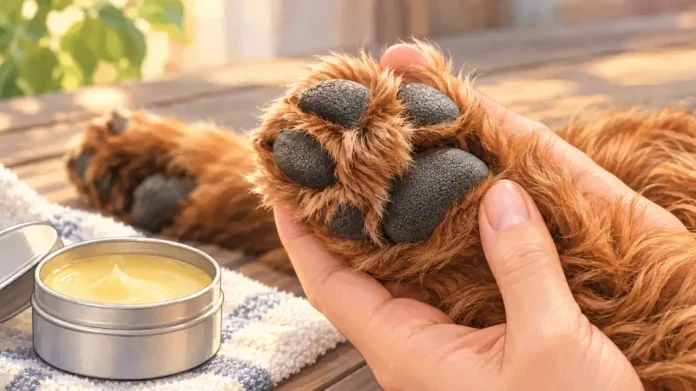

Do dogs need dog paw balm? Not every dog needs paw balm, but it can help protect and moisturize dry, rough, or mildly cracked paw pads. It may also provide a barrier against snow, ice, road salt, and other environmental irritants. However, serious burns, deep cracks, bleeding, or infections require veterinary care.
WomanlyZine.com
A dog’s paw pads are built to handle everyday walking, but they are not indestructible. Rough pavement, hot asphalt, ice, road salt, chemicals, excessive exercise, and dry conditions can cause cracking, irritation, burns, or painful tears. So, do dogs really need paw balm? Not necessarily. A healthy dog with normal paw pads may not need regular balm, but a pet-safe paw balm or wax can be useful as a protective and moisturizing barrier in specific situations, particularly when paws are dry, rough, or exposed to harsh environmental conditions.
The more important point is that paw balm is preventive care, not a substitute for veterinary treatment. If your dog has bleeding, deep cracks, significant discoloration, exposed tissue, swelling, persistent limping, or signs of infection, applying balm alone is not appropriate. Those symptoms can indicate an injury or an underlying medical problem that requires veterinary assessment.
Table of Contents
What Are Dog Paw Pads?
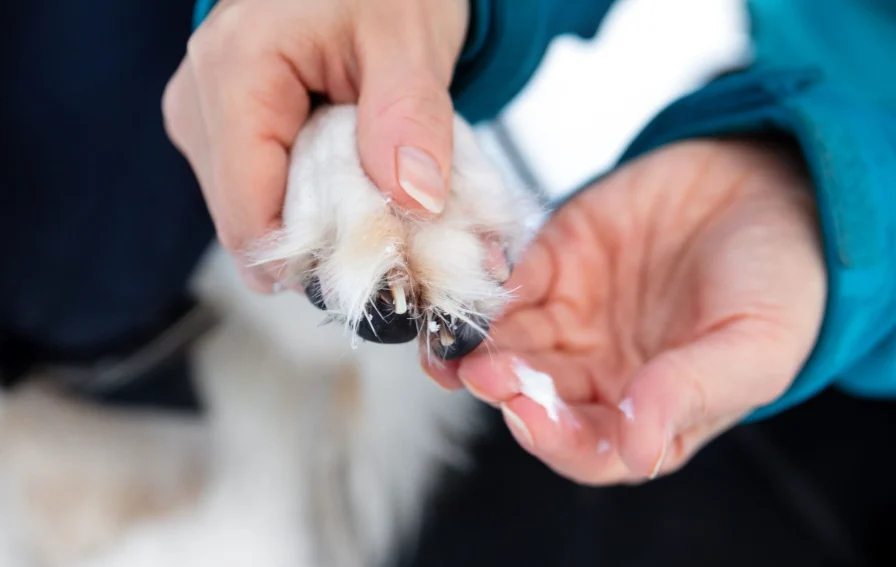
Dog paw pads are thick areas of specialized skin on the underside of the feet. They provide several important functions:
- Cushioning each step
- Providing traction
- Protecting deeper tissues from rough surfaces
- Helping absorb mechanical shock
- Providing some insulation against environmental temperatures
The paw pads are particularly important because dogs walk directly on them. A small injury can therefore be repeatedly irritated every time the dog stands or walks. VCA notes that torn paw pads can be slow to heal because normal walking repeatedly places pressure on the injured area.
Healthy paw pads generally feel firm and slightly rough rather than soft like the skin on a person’s hand.
Does Every Dog Need Paw Balm?
No.
If your dog’s paw pads are healthy, intact, comfortable, and exposed primarily to ordinary walking conditions, routine paw balm is not necessarily required.
A balm becomes more useful when there is a specific reason for additional protection, such as:
| Situation | Potential benefit of paw balm |
|---|---|
| Dry or rough pads | Helps moisturize and soften the outer surface |
| Mild cracking | May reduce dryness and friction |
| Snow and ice | Can help reduce ice-ball formation |
| Salt-treated sidewalks | Provides an additional barrier |
| Frequent outdoor activity | Can help protect against environmental stress |
| Hot-weather walks | May support pad conditioning, but does not make hot pavement safe |
| Winter conditions | Helps protect against dryness and environmental exposure |
VCA specifically recommends paw balm or wax as one option for dogs exposed to snow, ice, and deicing agents, and notes that balm can also moisturize rough or cracked pads.
However, a product should be viewed as one component of paw care, rather than something every dog needs every day.
Why Do Dog Paw Pads Become Dry or Cracked?
Paw-pad problems can have several causes. Understanding the cause is more important than simply applying a moisturizing product.
1. Environmental exposure
Repeated contact with rough concrete, asphalt, gravel, sand, snow, or ice can place mechanical stress on the pads.
A dog that suddenly goes from short walks to long hikes may develop irritation simply because the paws have not adapted to the increased workload.
2. Hot pavement
Hot pavement is one of the most important environmental hazards for dog paws.
Asphalt and other hard surfaces can become significantly hotter than the surrounding air. The American Kennel Club notes that pavement can cause discomfort, blisters, and burns to paw pads, particularly during hot weather.
This is an important distinction:
Paw balm does not make dangerously hot pavement safe.
Changing the walking time, choosing grass or shaded routes, or using properly fitted protective boots can be more effective when surface temperatures are high.
3. Winter conditions
Cold weather creates a different set of problems.
Snow, ice, and deicing salts can irritate the paws. Snow and ice can also accumulate between the toes.
VCA recommends several strategies, including booties, paw balm or wax, and checking the paws after outdoor activity.
4. Excessive licking
Some dogs repeatedly lick their paws because of allergies, irritation, parasites, infection, foreign material, or other dermatologic problems.
In this situation, repeatedly applying balm without identifying the reason for the licking can mask the underlying issue.
5. Medical conditions
Not every rough paw pad is simply “dry skin.”
Some dogs develop hyperkeratosis, a condition in which the outer layer of the skin becomes excessively thick.
Merck Veterinary Manual describes familial footpad hyperkeratosis in certain breeds, where severe thickening can result in horns, fissures, secondary infections, pain, and lameness.
Footpad changes can also occur as part of systemic diseases. For example, Merck describes hepatocutaneous syndrome, which can produce hyperkeratosis, crusting, ulceration, and other abnormalities involving the paw pads.
That is why persistent or unusual paw-pad changes deserve professional evaluation.
What Does Paw Balm Actually Do?
Most paw balms are designed to perform one or both of these functions:
Moisturizing
Emollient ingredients help soften the outer layer of the paw pad and reduce excessive dryness.
Barrier protection
A waxy or oily layer can create a physical barrier between the paw and environmental irritants.
This is particularly useful during winter when paws encounter snow, ice, and deicing chemicals.
The key concept is support and protection—not healing every paw problem.
A balm may help a mildly dry paw. It cannot repair a deep laceration, remove a foreign body, treat an infection, or reverse a significant burn.
When Should You Apply Paw Balm?
For a dog with mildly dry or rough pads, balm can be used as part of routine paw care.
A practical approach is:
Before outdoor exposure
Apply a thin, even layer to the paw pads when the goal is environmental protection.
This can be particularly useful before exposure to snow, ice, or salted sidewalks.
After cleaning
If your veterinarian has ruled out injury or disease, a small amount of pet-safe balm can be applied after washing and thoroughly drying the paws.
During periods of increased activity
Dogs that suddenly increase their walking, hiking, or running may benefit from gradual conditioning rather than relying solely on balm.
The goal should be to allow the paws to adapt progressively to the new surface and workload.
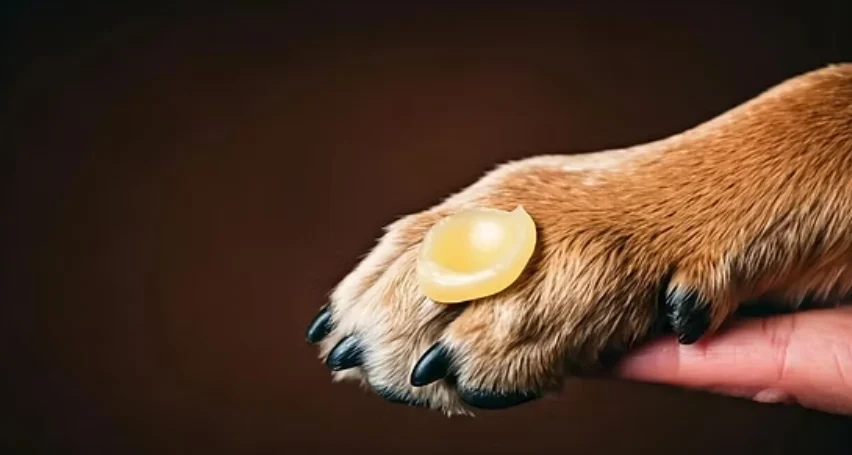
How to Apply Paw Balm Correctly
A simple routine can make paw care much easier.
Step 1: Inspect the paws
Look at:
- All four paw pads
- The spaces between the toes
- Nails
- The skin around the pads
Look for cracks, redness, swelling, bleeding, foreign objects, or unusual discharge.
Step 2: Clean the paws
After outdoor activity, remove visible dirt, salt, mud, or other contaminants.
For chemical exposure, thorough washing with water is particularly important. VCA recommends rinsing paws exposed to corrosive substances and using mild soap before rinsing thoroughly.
Step 3: Dry completely
Pay attention to the spaces between the toes.
Step 4: Apply a small amount
Massage a thin layer into the paw pads.
There is usually no advantage to covering the paw with a very thick layer.
Step 5: Prevent excessive licking
If your dog immediately licks the product off, the intended protective effect may be reduced.
Some dogs may also develop gastrointestinal problems after ingesting inappropriate products or large amounts of topical products. Choose products specifically formulated for dogs and follow the manufacturer’s instructions.
What Ingredients Should You Look For?
Rather than choosing a product simply because it says “paw balm,” look for a formulation designed specifically for dogs.
Useful characteristics include:
- Pet-safe formulation
- Moisturizing/emollient ingredients
- Barrier-forming waxes or oils
- Clear ingredient labeling
- No unnecessary fragrances
- Instructions specifically intended for canine paws
A product’s ingredient list matters because dogs can lick their paws after application.
Do not automatically assume that a product designed for human skin is appropriate for dogs.
VCA cautions against using human products on dogs without veterinary approval in certain situations, because dogs may react differently and may ingest topical substances through licking.
Paw Balm vs. Dog Boots: Which Is Better?
They serve different purposes.
| Paw balm | Dog boots |
|---|---|
| Creates a topical barrier | Creates a physical barrier |
| Can moisturize dry pads | Reduces direct contact with surfaces |
| Useful for winter salt exposure | Useful for hot, cold, or rough surfaces |
| Easy to apply | Requires fitting and acclimation |
| May be useful for mild dryness | More protective against extreme surfaces |
For moderate environmental exposure, balm may be sufficient.
For extreme heat, severe cold, rough terrain, or contaminated surfaces, physical protection may provide a greater barrier.
However, boots must fit correctly. The AKC recommends giving dogs time to acclimate to wearing them and choosing an appropriate fit that is secure without being excessively tight.
Can Paw Balm Prevent Burns From Hot Pavement?
No—not reliably.
This is one of the most important misconceptions about paw balm.
If the pavement is hot enough to burn the pads, the appropriate response is to avoid the surface rather than depend on balm.
The AKC recommends avoiding hot pavement, walking during cooler parts of the day, and choosing grass or shaded areas when possible. It also notes that when outdoor surfaces are dangerously hot, protective footwear may be appropriate.
VCA similarly notes that dogs can burn their foot pads on scorching sidewalks and that severe burns require veterinary care.
What Should You Do If Your Dog’s Paw Pad Is Cracked?
The first question is how severe the crack is.
Mild dryness
If the pad is intact but simply rough or mildly dry, environmental management and a pet-safe moisturizer or balm may be reasonable.
Visible fissure
If the crack is deep, painful, bleeding, or repeatedly opening when your dog walks, don’t rely solely on balm.
Open wound
Treat it as an injury.
VCA recommends cleaning paw injuries, checking for foreign material, controlling bleeding, and protecting the wound while seeking veterinary care when appropriate.
A deep object embedded in the pad should not be aggressively dug out at home.
When Should You See a Veterinarian?
Seek veterinary attention if you notice:
- Persistent limping
- Significant pain
- Bleeding that does not stop
- Deep cuts or punctures
- Burns
- Exposed tissue
- Significant swelling
- Pus or abnormal discharge
- Foul odor
- Severe redness
- Repeated cracking
- Marked thickening of the pads
- Persistent paw licking
- A foreign object embedded in the paw
- Sudden changes affecting multiple paw pads
VCA specifically identifies deep punctures or lacerations, burns, embedded foreign objects, and signs of infection as reasons for veterinary attention.
A dog that continues to limp for more than 24 hours should also be evaluated rather than simply treated with topical products.
A Simple Weekly Paw-Pad Check
For most dogs, prevention begins with observation rather than products.
Once or twice a week, take a few minutes to examine the paws.
Check → Clean → Dry → Protect when necessary → Monitor
Look for:
- Cracks
- Redness
- Swelling
- Cuts
- Foreign material
- Excessive thickening
- Changes in nail condition
- Persistent licking
This simple routine can help owners identify problems before a minor irritation becomes a more significant injury.
Real-World Example: The Weekend Hiker
Consider a dog that normally walks 20–30 minutes each day but suddenly joins its owner for a two-hour hike.
The dog may have perfectly healthy paw pads before the hike. Afterward, the owner notices licking and mild redness.
The appropriate response is not automatically to apply a thick layer of balm and continue exercising.
Instead:
Inspect → determine whether there is an injury → clean and dry → restrict further activity if painful → monitor → seek veterinary care if symptoms persist or are significant.
Gradual conditioning is important because paw pads need to adapt to increased mechanical stress. The AKC notes that dogs can develop blisters when they undertake prolonged activity without appropriate conditioning.
FAQs
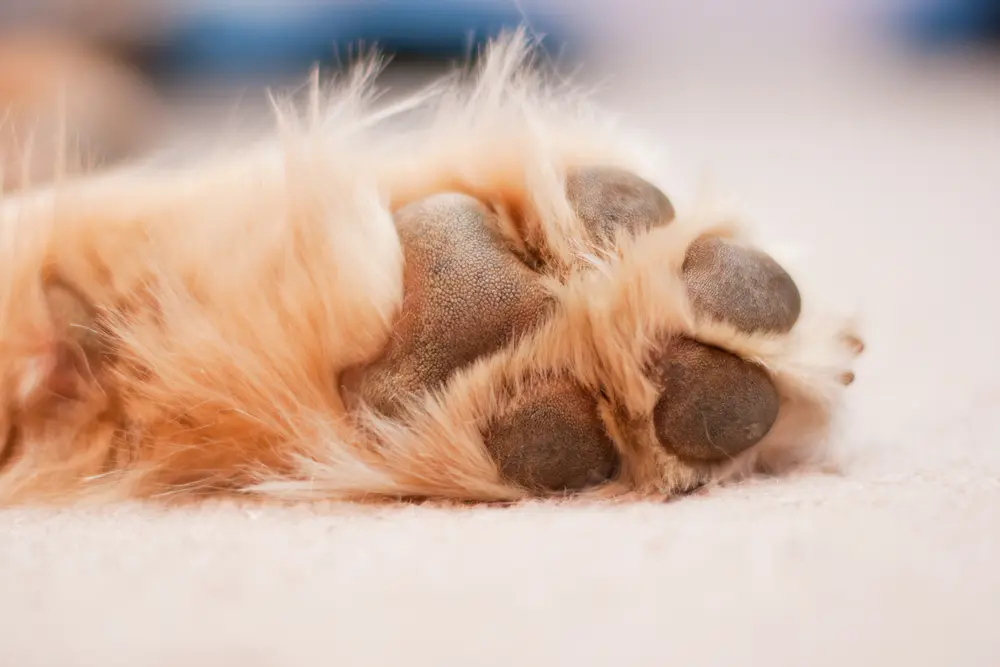
Is a dog paw balm necessary for dogs?
No. Healthy dogs do not automatically need daily paw balm. It can be useful when paw pads are dry or when environmental conditions such as snow, ice, salt, or rough surfaces create additional stress.
Can I use human moisturizer on my dog’s paws?
It is better to use a product specifically formulated for dogs unless your veterinarian recommends otherwise. Dogs may lick topical products, and human formulations are not automatically appropriate for canine use.
Should I use a dog paw balm before walking?
It can be useful as a protective barrier in certain environments, particularly winter conditions involving snow, ice, and deicing chemicals.
Does a dog paw balm protect against hot pavement?
Not enough to make dangerously hot pavement safe. Avoiding excessive heat and changing the walking route or time is more important.
Can a dog paw balm heal cracked paw pads?
It may help with mild dryness and support the skin barrier, but deep fissures, bleeding, infection, burns, or painful injuries require appropriate veterinary assessment.
The Bottom Line: Does Your Dog Really Need Paw Balm?
Paw balm is optional preventive care—not an essential product for every dog.
If your dog’s paw pads are healthy and your dog walks primarily on ordinary, safe surfaces, regular balm may not be necessary.
But if your dog experiences dry or rough pads, winter salt, snow, ice, or frequent exposure to harsh outdoor surfaces, a properly formulated canine paw balm or wax can provide useful moisturizing and barrier protection.
The most important part of paw care, however, is not the balm itself. It is regular inspection, appropriate exercise conditioning, environmental awareness, and early recognition of injury.
And remember the critical distinction:
Balm can help protect healthy or mildly dry paw pads. It should never be used to hide a serious paw injury.
If your dog is limping, bleeding, developing deep cracks, showing significant redness or swelling, or repeatedly licking a painful paw, veterinary evaluation is more important than choosing a better balm.
References
- VCA Animal Hospitals — First Aid for Torn or Injured Foot Pads in Dogs
Guidance on dog paw-pad injuries, cuts, burns, foreign objects, and when veterinary care is needed. - American Kennel Club (AKC) — How to Protect Your Dog’s Paws From Hot Pavement
Guidance on hot pavement, paw burns, walking during cooler hours, and protective footwear.




