


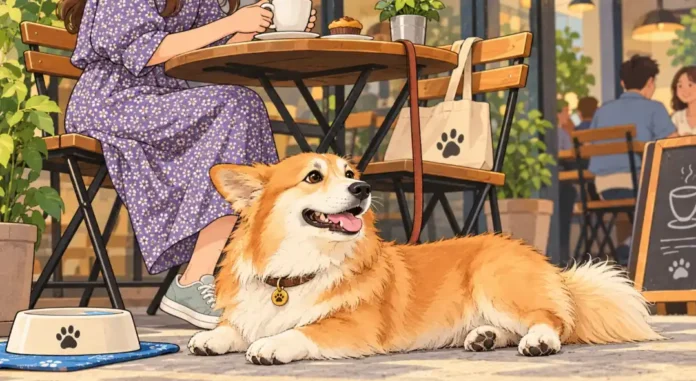

What is the essential etiquette for visiting a cafe with your dog?
DoggyZine.com
Essential etiquette for visiting a cafe with your dog includes checking the pet policy, keeping your dog leashed and close, preventing barking or jumping, respecting other customers and dogs, keeping pets away from food-service areas, and cleaning up immediately after accidents.
Taking your dog to a cafe can be a relaxing way to spend time together, but a successful dog-friendly cafe visit depends on more than simply choosing a pet-friendly location. Good café etiquette means keeping your dog under control, respecting other customers, protecting food and service areas from contamination, and leaving the café clean and comfortable for everyone.
The most important rule is simple: your dog should remain calm, supervised, and out of the way of people, food, staff, and other animals. Before visiting, confirm that the café actually permits dogs and whether dogs are allowed indoors, outdoors, or only in designated areas. Rules vary by country, local authority, and individual business. In the U.S., for example, the FDA Food Code is a model regulation rather than a universal law, and its 2026 edition allows approved food establishments to permit pet dogs in outdoor dining areas under specified conditions.
Table of Contents
What Is Proper Dog cafe Etiquette?
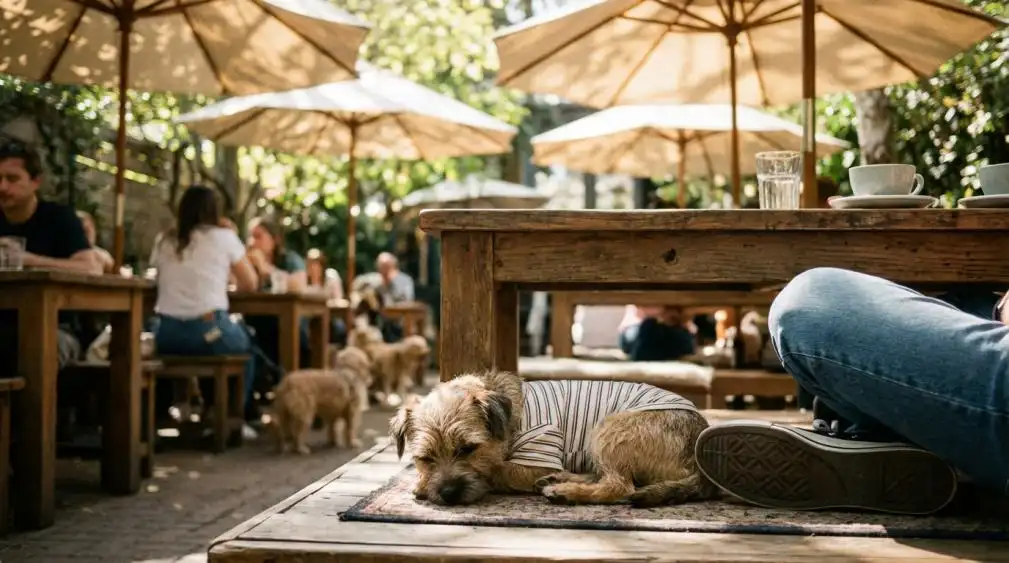
Proper dog cafe etiquette is a set of behaviors that allows dogs and people to share a cafe environment safely and respectfully. It includes:
- Confirming the cafe’s dog policy before arrival
- Keeping your dog on a suitable leash or under effective control
- Preventing barking, jumping, begging, or approaching strangers
- Keeping dogs away from tables, counters, food, utensils, and staff work areas
- Bringing waste bags and cleaning accidents immediately
- Respecting customers who are afraid of or uncomfortable around dogs
- Asking before allowing your dog to interact with another dog
- Recognizing when your dog is stressed or overstimulated
- Leaving if your dog cannot remain calm and controlled
These behaviors are not merely about being considerate. They also help reduce sanitation, injury, conflict, and stress risks in a busy public environment.
1. Check the cafe’s Dog Policy Before You Go
Never assume that a cafe is dog-friendly simply because you see photographs of dogs there.
Policies can differ considerably. A business might:
- Allow dogs only on an outdoor terrace
- Permit dogs indoors at specific times
- Allow service animals but not pets
- Restrict dogs from certain seating areas
- Require dogs to remain on the floor
- Have size or behavior restrictions
- Provide designated dog seating or water stations
Local regulations may also affect what the cafe can legally permit.
For example, the 2026 FDA Food Code states that pet dogs may be allowed in outdoor dining areas when approved by the relevant regulatory authority. It also identifies controls such as preventing dogs from accessing food, utensils, food-contact surfaces, and staff, as well as cleaning contaminated surfaces.
Best practice: Check the cafe’s website or social media page, then call if the policy is unclear.
2. Give Your Dog a Walk Before the cafe Visit
One of the simplest ways to improve cafe behavior is to meet your dog’s basic needs before sitting down.
A short walk can provide opportunities for:
- Toileting
- Sniffing
- Light physical activity
- Mental stimulation
A dog arriving after being confined at home for several hours may have difficulty settling in a stimulating cafe.
However, the goal isn’t to exhaust your dog. A highly intense play session immediately before entering a cafe can leave some dogs more excited rather than calmer.
A better routine is:
Walk → toilet break → brief settling period → cafe
This gives your dog an opportunity to arrive in a more relaxed state.
3. Bring the Right Equipment
A cafe visit is much easier when you prepare for predictable situations.
Recommended items
| Item | Why it helps |
|---|---|
| Standard leash | Maintains control in crowded spaces |
| Waste bags | Allows immediate cleanup |
| Portable water bowl | Prevents dogs from drinking from inappropriate containers |
| Fresh water | Helps keep your dog hydrated |
| Small treats | Useful for rewarding calm behavior |
| Mat or towel | Gives the dog a defined resting area |
| Paper towels/wipes | Useful for minor spills or muddy paws |
| Required medications | Important for dogs with regular medication needs |
Avoid bringing toys that squeak loudly or encourage vigorous play. A cafe is generally a place for quiet settling rather than active recreation.
4. Keep Your Dog Close to You
A leash isn’t useful if the dog is allowed to wander several feet away.
Keep the leash short enough that your dog cannot easily:
- Walk into another customer’s space
- Trip a server
- Reach another dog’s bowl
- Sniff food on another table
- Block a walkway
- Approach a child without permission
Avoid allowing the leash to stretch across walking paths.
This is especially important in cafes because employees frequently carry hot beverages, dishes, and food. An unexpected dog crossing a server’s path can create a safety problem for both the employee and the dog.
A good rule: If someone needs to step around your dog, your dog is probably positioned too far into the traffic area.
5. Never Assume Everyone Wants to Meet Your Dog
This is one of the most important aspects of public dog etiquette.
Some people love dogs. Others may be:
- Afraid of dogs
- Allergic
- Uncomfortable around unfamiliar animals
- Eating with young children
- Working on a laptop
- Having a business meeting
- Simply not interested in interacting with a dog
A dog approaching someone else’s chair can feel intrusive even when the dog is friendly.
Instead of allowing your dog to walk over, ask:
“Would you like to say hello to my dog?”
If the person says no, simply keep your dog with you.
The same rule applies to other dogs
Do not assume two dogs should greet each other because both appear friendly.
Ask the owner first.
Even apparently relaxed dogs may not appreciate an unfamiliar dog entering their personal space, particularly in a confined café environment.
6. Don’t Allow Jumping, Excessive Barking, or Begging
A dog doesn’t need to be perfectly trained to visit a café, but it should be capable of basic public behavior.
The most useful skills are:
Sit → Stay → Settle → Leave it → Come
Of these, settle may be the most valuable cafe skill.
A dog that can lie quietly beside its owner for 30–60 minutes is much easier to accommodate than a dog constantly searching for stimulation.
What should you do if your dog starts barking?
First identify the trigger.
Your dog may be reacting to:
- Another dog
- Someone approaching the table
- Food smells
- Loud equipment
- Crowded surroundings
- Anxiety
- Excitement
Rather than repeatedly saying “No,” increase distance from the trigger and redirect the dog’s attention.
If barking continues, leaving the café is often the most responsible solution.
A cafe visit is optional. The comfort of other customers and the welfare of your dog should come first.
7. Keep Your Dog Away From Food and Service Areas
This is both an etiquette and food-safety issue.
Your dog should not:
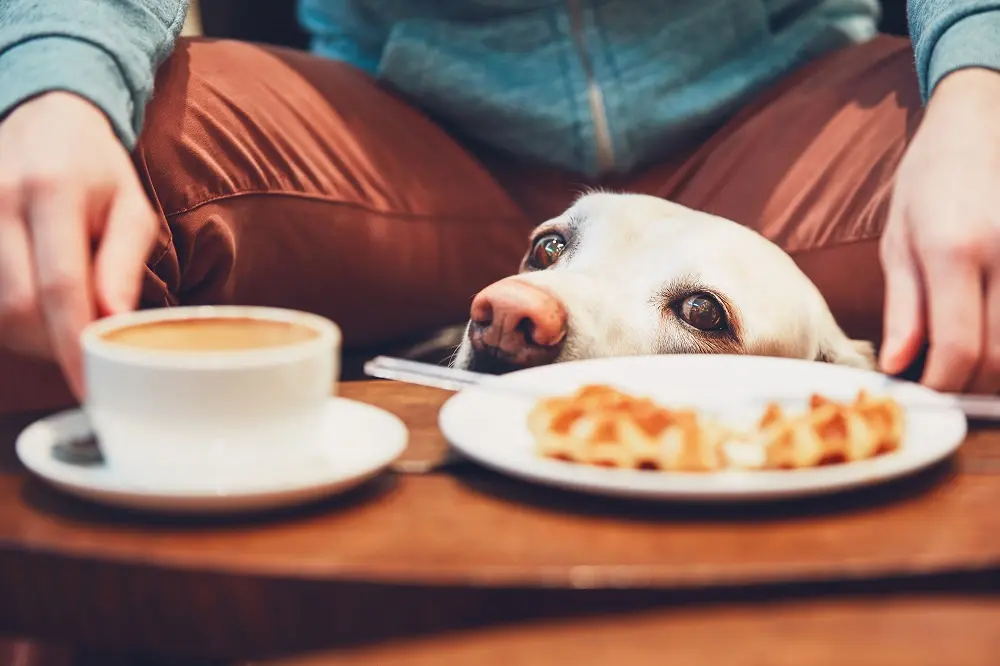
- Put its head on a customer’s table
- Lick plates
- Reach for food
- Drink from human cups
- Sit on food-service counters
- Approach food-preparation areas
- Touch utensils
- Jump toward employees carrying food
Food establishments have specific responsibilities for preventing contamination. The FDA Food Code, for example, emphasizes controlling animals so they cannot become a source of contamination involving food, utensils, linens, and food-contact surfaces.
The practical rule is simple:
Your dog’s nose should stay out of human food.
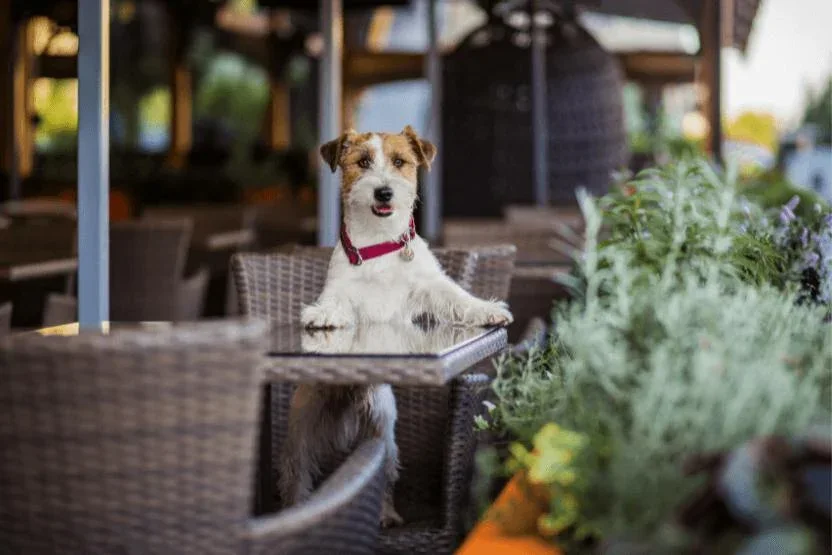
8. Don’t Feed Your Dog From Your Plate
Sharing a small bite may seem harmless, but it creates several problems.
Human foods can contain ingredients that are inappropriate or potentially dangerous for dogs, and feeding from the table can encourage begging.
Instead, if the cafe permits it, bring an appropriate dog treat or your dog’s normal food.
If the establishment sells food specifically for dogs, ask about its ingredients if your dog has allergies or dietary restrictions.
Also remember that a cafe’s “dog menu” does not automatically mean every item is appropriate for every dog.
9. Use a Designated Dog Area When Available
If the cafe provides a dog-friendly section, use it.
Designated areas can help separate dogs from:
- Food preparation
- High-traffic walkways
- Customers who don’t want animals nearby
- Other seating areas
This approach also makes the cafe’s rules easier for employees to enforce consistently.
The FDA’s 2026 Food Code discussion of dog-friendly outdoor dining specifically recognizes the value of designated areas, signage, restraint, and procedures for maintaining sanitation.
10. Always Clean Up After Your Dog
Responsible owners clean up immediately.
That includes:
- Feces
- Urine
- Vomit
- Spilled water
- Excessive drool when it contaminates surfaces
If an accident occurs inside the cafe, tell an employee rather than quietly walking away.
Staff may need to follow a specific cleaning and sanitation procedure.
Food-safety guidance places particular importance on cleaning surfaces contaminated by bodily fluids. The FDA Food Code also addresses procedures for contamination events involving vomit or fecal matter in food establishments.
Being honest about an accident allows the cafe to respond appropriately.
11. Keep Your Dog Off Tables and Food-Service Furniture
Even when a cafe appears relaxed about dogs, don’t place your dog on:
- Dining tables
- Food counters
- Ordering counters
- Food preparation surfaces
Unless the business specifically provides furniture intended for dogs, keeping your dog on the floor or on a personal mat is the safest approach.
A dog-friendly cafe is not necessarily a place where every surface becomes a dog-accessible surface.
12. Watch Your Dog’s Body Language
A major part of responsible cafe etiquette is recognizing when your dog doesn’t actually want to be there.
Signs of stress may include:
- Repeated lip licking
- Yawning when not tired
- Turning the head away
- Cowering
- Excessive panting
- Pacing
- Hiding
- Trembling
- Repeated attempts to escape
- Growling
- Sudden irritability
A dog that is becoming overwhelmed should not be forced to remain simply because the owner wants to finish a coffee.
A practical decision rule
Relaxed dog → continue.
Increasing stress → reduce stimulation.
Persistent distress or threatening behavior → leave.
This is particularly important in busy cafes where unfamiliar people, sounds, smells, and dogs can create a high level of stimulation.
13. Choose Your Seating Strategically
Where you sit can make a surprisingly large difference.
Usually better choices
- Corner tables
- Outdoor tables where dogs are permitted
- Quieter sections
- Tables away from entrances
- Locations with enough floor space for the dog
Often more difficult
- Narrow aisles
- Tables beside the entrance
- Areas next to busy counters
- High-traffic walkways
- Tables immediately beside another dog
Avoid tying your dog’s leash to furniture in a way that creates a trip hazard or prevents quick control.
14. Be Especially Careful Around Children
Dogs and children should not be allowed to interact automatically.
Children may:
- Move suddenly
- Hug dogs
- Touch ears or tails
- Make loud noises
- Attempt to feed the dog
Even a normally friendly dog can react differently when startled or uncomfortable.
If a child approaches, keep your dog beside you and decide whether an interaction is appropriate.
Never assume that “my dog is friendly” means every interaction is safe.
15. Understand the Difference Between a Pet and a Service Animal
This distinction matters legally and practically.
A pet dog accompanying its owner for companionship is different from a trained service animal assisting a person with a disability.
For example, U.S. federal disability law gives service animals specific access protections in places of public accommodation, including restaurants, although exact legal requirements depend on the jurisdiction and situation.
Therefore, cafe policies concerning pets should not be confused with laws governing service animals.
If you are traveling internationally, check the relevant local regulations rather than assuming that rules from your home country apply.
16. Know When Not to Bring Your Dog
Sometimes the most responsible cafe etiquette is leaving your dog at home.
Consider skipping the cafe if your dog is:
- Sick
- Recovering from illness or surgery
- Extremely anxious
- Aggressive toward people or dogs
- Unable to settle in public
- Showing signs of significant stress
- Experiencing gastrointestinal problems
- Not reliably house-trained
A dog-friendly business does not mean every dog is ready for a public cafe environment.
Start with easier environments
If your dog has never visited a cafe, begin with a short visit during a quiet period.
For example:
10–15 minutes → calm behavior → leave
Then gradually increase the duration.
This can be more successful than immediately attempting a two-hour weekend brunch.
A Simple Step-by-Step cafe Routine
For owners who want an easy system, use this sequence:
Before leaving home
- Check the cafe’s current dog policy.
- Give your dog a suitable walk.
- Allow a toilet break.
- Pack leash, water, bowl, treats, and waste bags.
When you arrive
- Keep your dog close.
- Choose an appropriate seating area.
- Allow your dog a few minutes to settle.
- Reward calm behavior.
During the visit
- Keep your dog away from food and service areas.
- Prevent jumping, barking, and begging.
- Ask before allowing interactions.
- Watch your dog’s stress signals.
- Clean up immediately if necessary.
Before leaving
- Check the area for dropped treats, hair, waste, or water.
- Make sure the walkway is clear.
- Leave before your dog becomes excessively tired or overstimulated.
Dog cafe Etiquette: Quick Checklist
| Rule | What to Do |
|---|---|
| cafe policy | Confirm dogs are permitted |
| Leash | Keep your dog under close control |
| Seating | Choose a low-traffic area |
| Other customers | Ask before allowing interaction |
| Other dogs | Ask the owner before greeting |
| Food | Keep your dog away from human food |
| Tables | Keep dogs off dining surfaces |
| Barking | Redirect or leave if persistent |
| Waste | Clean accidents immediately |
| Stress | Leave if your dog becomes distressed |
| Children | Supervise all interactions |
| Staff | Follow cafe instructions |
| Service animals | Respect applicable legal protections |
FAQs
Can I take my dog into any dog-friendly cafe?
No. “Dog-friendly” does not necessarily mean dogs are permitted everywhere inside the establishment. The business may restrict dogs to certain areas, particularly outdoor seating. Always check the current policy and applicable local regulations.
Should my dog sit on a cafe chair?
Generally, keep your dog on the floor or on a designated dog mat unless the cafe specifically permits dogs on furniture. This reduces contact with customer seating and makes it easier to control the dog.
Can my dog eat from my plate at a cafe?
It is better not to feed your dog directly from your plate. Bring appropriate dog treats or food instead, and follow the cafe’s rules regarding pet food.
What should I do if my dog barks at another dog?
Increase distance and redirect your dog’s attention. If barking continues, consider leaving. A cafe is not an appropriate place to force prolonged interaction between dogs.
How long should a dog stay at a cafe?
There is no universal ideal duration. It depends on the individual dog, environment, temperature, crowd level, and behavior. For inexperienced dogs, short visits are generally easier to manage than long ones.
Final Takeaway
The essential etiquette for visiting a cafe with your dog is to prepare beforehand, maintain close control, respect other people and animals, protect food-service areas, clean up immediately, and leave when your dog is no longer comfortable or manageable.
The best cafe dogs are not necessarily the most sociable dogs. They are dogs that can settle quietly, remain close to their owner, ignore food and strangers when necessary, and cope comfortably with the environment.
For owners, the goal should be simple: make your dog’s presence feel almost invisible to everyone else. When customers can enjoy their coffee, staff can work safely, and the dog can relax without being overwhelmed, a dog-friendly cafe experience works exactly as intended.
References
- Centers for Disease Control and Prevention (CDC). Animals in Healthcare Facilities. Background information on animal-related hygiene, environmental controls, and infection-prevention considerations.




