


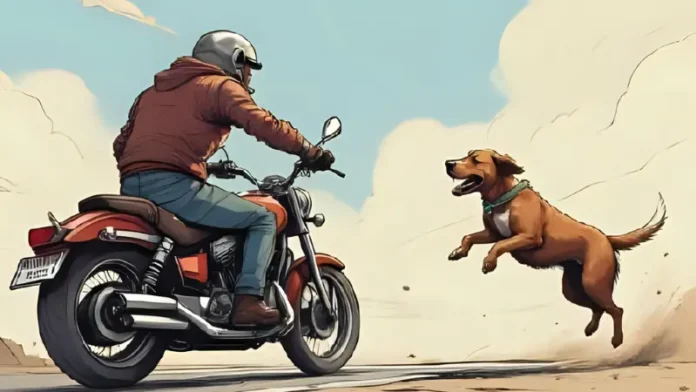
Dogs chase motorbikes because of their natural prey drive, territorial instincts, and reaction to fast-moving objects. The sound, speed, and vibration of a motorbike can trigger excitement or fear in dogs, causing them to run after it. Training, desensitization, and proper restraint can help stop this behavior.
DoggyZine.com
Have you ever wondered why dogs chase motorbikes with such intensity? The behavior may seem playful, but it often stems from instincts like prey drive, territorial protection, or anxiety. In this guide, we’ll explore why dogs chase motorbikes and provide practical strategies to stop this risky habit.
Have you ever been startled by a dog suddenly darting out to chase your motorbike? You’re not alone. Around the world, bikers often encounter dogs chasing them down the street, barking aggressively, and sometimes even trying to bite tires. This behavior may seem random, but it’s actually rooted in canine psychology, instincts, and environmental triggers.
In this comprehensive 2025 guide, we’ll explore why dogs chase motorbikes, the science behind the behavior, the risks it poses to both riders and animals, and the most effective strategies to prevent and manage this issue.
Table of Contents

Why Do Dogs Chase Motorbikes?
1. Prey Drive Instinct
Dogs are descendants of wolves, and many breeds retain a strong prey drive. A fast-moving motorbike can mimic prey in motion, triggering the dog’s instinct to chase. This is especially common in breeds like Border Collies, German Shepherds, and Terriers.
2. Territorial Behavior
Dogs are naturally territorial. When a motorbike passes through what a dog perceives as its territory, the dog may chase it away as a defense mechanism. The loud noise amplifies this reaction, making the bike appear as an intruder.
3. Noise and Vibration Sensitivity
Motorbikes create loud engine sounds and strong vibrations. For dogs with sensitive hearing, this can cause stress or overstimulation. Their chase response becomes an outlet for the anxiety caused by the noise.
4. Herding Instincts
Certain breeds, such as Australian Shepherds and Collies, are genetically predisposed to herding. A moving motorbike may resemble livestock, triggering a herding chase response.
5. Learned Behavior
Sometimes, dogs chase motorbikes simply because it’s fun or rewarding. If they’ve done it before and found it stimulating, they’re more likely to repeat it.
Risks of Dogs Chasing Motorbikes
- For Riders – Sudden dog chases can cause loss of control, accidents, or collisions, putting bikers in danger.
- For Dogs – Chasing a motorbike can lead to injuries, road accidents, or even death.
- For Public Safety – A dog running onto the road may cause chain accidents involving multiple vehicles.
How to Stop Dogs from Chasing Motorbikes

1. For Dog Owners
- Training & Commands
Teach your dog recall commands like “Come” or “Stop.” Consistency and positive reinforcement help break the chasing habit. - Desensitization
Gradually expose your dog to motorbike sounds at a low volume, rewarding calm behavior. Slowly increase exposure to reduce reactivity. - Physical Boundaries
Ensure fences and gates are secure to prevent your dog from darting into the road. - Exercise & Stimulation
Dogs with pent-up energy are more likely to chase. Daily walks, play, and mental stimulation can reduce unwanted behavior. - Professional Training
For dogs with strong chase drives, consult a professional trainer or behaviorist.
2. For Riders
- Slow Down Near Dogs
Reducing speed decreases excitement triggers and gives both rider and dog more reaction time. - Avoid Eye Contact
Direct eye contact can be seen as a challenge by dogs, increasing aggression. - Use Deterrents Safely
Some riders carry harmless deterrents like high-pitched ultrasonic devices to discourage chasing. - Stay Alert in High-Risk Areas
Be especially cautious in rural or suburban neighborhoods where free-roaming dogs are common.
The Science of Canine Chasing Behavior

Researchers in animal behavior note that the motor pattern sequence in dogs—stalk, chase, grab, kill—is deeply embedded in their instincts. Motorbikes, unlike cars, are smaller, louder, and faster, making them a prime trigger.
Additionally, studies show that dopamine release occurs during chasing, giving dogs a neurological reward. This means that once a dog starts chasing motorbikes, the behavior can become addictive unless corrected early.
Preventing Dog-Motorbike Incidents in Communities
- Education Campaigns – Communities should educate dog owners on the risks of letting pets roam freely.
- Leash Laws & Enforcement – Municipalities can enforce leash regulations to prevent road incidents.
- Biker Awareness – Motorcycle groups can run awareness programs to teach riders how to handle dog encounters.
Breed-Specific Tendencies
Some breeds are more prone to chasing motorbikes than others:
- High Risk Breeds – Border Collie, Australian Shepherd, German Shepherd, Jack Russell Terrier, Belgian Malinois.
- Moderate Risk Breeds – Labrador Retriever, Beagle, Boxer.
- Low Risk Breeds – Basset Hound, Bulldog, Shih Tzu.
Practical Tips for Bikers to Stay Safe
- Accelerate Out of Range – If safe, increase speed gradually to move away.
- Don’t Kick or Swat – Physical retaliation can escalate aggression.
- Pull Over if Necessary – Sometimes the safest option is to stop until the dog loses interest.
- Use Engine Sound Strategically – Revving lightly before passing can alert the dog from a distance, reducing surprise chases.
Future Solutions: Can Tech Help?
With advancements in AI-powered dog deterrent devices and smart collars, new technology may soon reduce dog-motorbike conflicts. GPS tracking, ultrasonic training tools, and community apps can alert riders to areas with roaming dogs.
Conclusion
Dogs chasing motorbikes may seem like random mischief, but it’s a deeply instinctive behavior linked to prey drive, territoriality, and sensory triggers. While this behavior poses real risks, both riders and dog owners can take steps to manage and prevent it through training, awareness, and safety practices.
By understanding the “why” behind the chase, we can create safer roads for both bikers and dogs in 2025 and beyond.

FAQs
Why do dogs chase motorbikes more than cars?
Dogs chase motorbikes more than cars because bikes are smaller, noisier, and faster-moving, triggering prey and territorial instincts more strongly.
Which dog breeds are most likely to chase motorbikes?
Breeds with strong prey or herding drives such as Border Collies, Australian Shepherds, and German Shepherds are most likely to chase motorbikes.
How can I train my dog to stop chasing motorbikes?
Training methods include recall commands, desensitization to motorbike sounds, using positive reinforcement, and professional behavioral training.
What should bikers do when a dog chases them?
Bikers should avoid sudden swerves, reduce speed safely, avoid eye contact, and if necessary, stop until the dog retreats.
Is chasing motorbikes dangerous for dogs?
Yes. Dogs risk severe injuries or death when chasing motorbikes due to road accidents, collisions, or exhaustion.




