


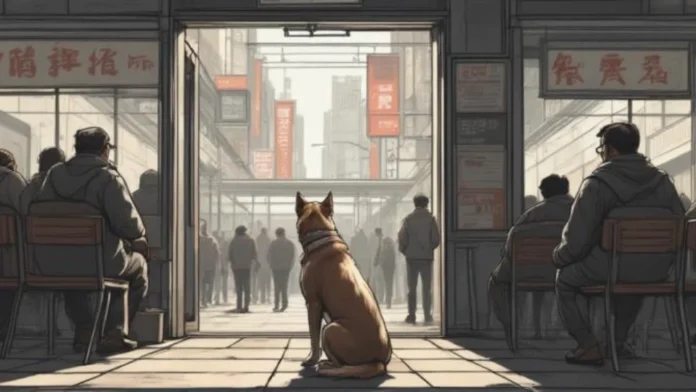
The true story of Hachikō is about a loyal dog in Japan who waited at Shibuya Station every day for nearly nine years after his owner’s death. His unwavering devotion turned waiting into a legacy and made Hachikō a global symbol of loyalty.
DoggyZine.com
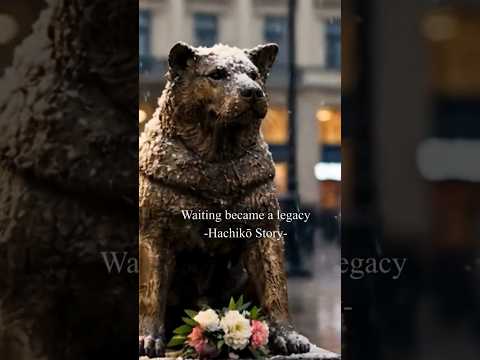
The true story of Hachikō is one of the most moving examples of loyalty ever recorded. Known as the dog whose waiting became a legacy, Hachikō returned daily to Shibuya Station in Japan, faithfully expecting his owner’s return long after death had made that impossible.
Some stories endure not because they are dramatic, but because they are true.
The story of Hachikō, Japan’s most beloved dog, is one such story—a quiet, unwavering testament to loyalty, love, and the profound bond between humans and animals.
Hachikō did not perform heroic feats. He did not save lives in battle or travel across continents.
He simply waited.
And in that waiting, he became a legacy.
More than a century later, Hachikō’s story continues to resonate across cultures, generations, and languages. It is cited in literature, memorialized in film, honored in sculpture, and shared endlessly in the digital age as a universal symbol of devotion.
This is the true, historical story of Hachikō—told with accuracy, cultural context, and enduring relevance.
Table of Contents
The Historical Setting: Tokyo in the Early 20th Century
To understand Hachikō, one must first understand Japan in the 1920s.
Tokyo was modernizing rapidly. Railways connected cities, Western education was expanding, and urban life was accelerating. Amid this transformation stood Shibuya Station, a growing transportation hub that would later become one of the busiest crossings in the world.
It was here that a quiet routine began—one that would unknowingly shape history.
Professor Hidesaburō Ueno and an Akita Puppy
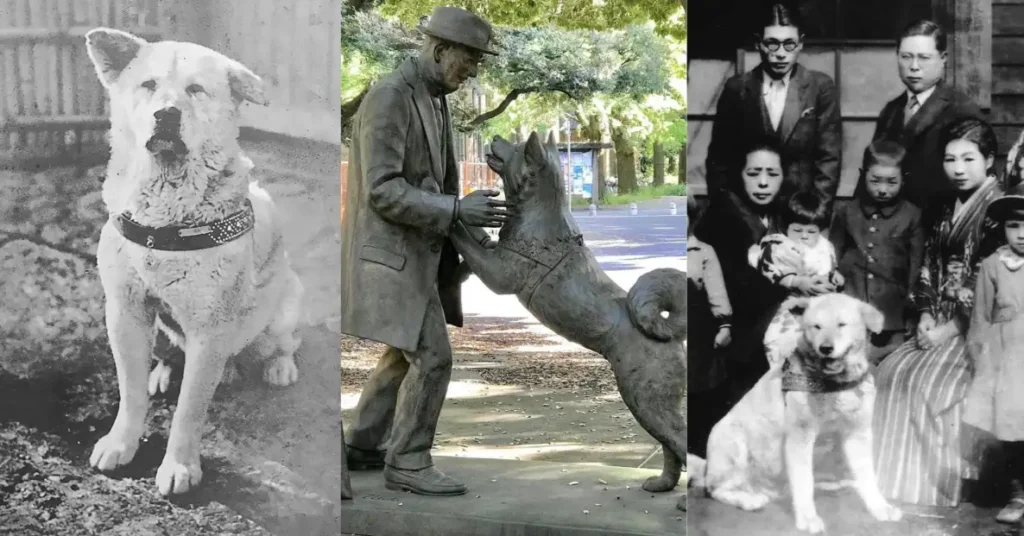
In 1924, Professor Hidesaburō Ueno, an agricultural scientist at Tokyo Imperial University, adopted a purebred Akita puppy from Ōdate, Akita Prefecture. He named the dog Hachikō, a name derived from “hachi” (eight), symbolizing good fortune in Japanese culture.
From the beginning, Hachikō formed a deep attachment to his owner.
Every morning, Hachikō accompanied Professor Ueno from their home to Shibuya Station, watching him depart for work. Every afternoon, without fail, the dog returned to the station to greet his owner as he stepped off the train.
This routine continued day after day—a simple rhythm of companionship.
The Day Everything Changed
On May 21, 1925, Professor Ueno suffered a sudden cerebral hemorrhage while at the university and passed away. He never returned to Shibuya Station.
Hachikō, unaware of death or finality, went to the station that afternoon as usual.
He waited.
And when his owner did not appear, Hachikō returned the next day.
And the next.
And the next.
Nine Years of Waiting
For nearly nine years, Hachikō returned to Shibuya Station every single day, arriving at the precise time his owner’s train was due.
At first, commuters paid little attention. Over time, station workers, shop owners, and daily travelers began to recognize the dog who never left.
Some fed him. Some shooed him away. Some ignored him.
But Hachikō remained.
Through summer heat and winter snow, through rain and illness, through aging bones and failing strength, he waited—never straying far from the spot where he last saw Professor Ueno.
This was not trained behavior.
It was not conditioned loyalty.
It was attachment.
National Recognition and Cultural Impact
In 1932, a former student of Professor Ueno published an article in a major Tokyo newspaper titled “The Faithful Dog Who Waits for His Master Even After Death.”
The story spread rapidly across Japan.
Hachikō became a national symbol of 忠誠 (chūsei)—loyalty and faithfulness. Children learned his story in school. Newspapers reported on his condition. People traveled to Shibuya just to see him.
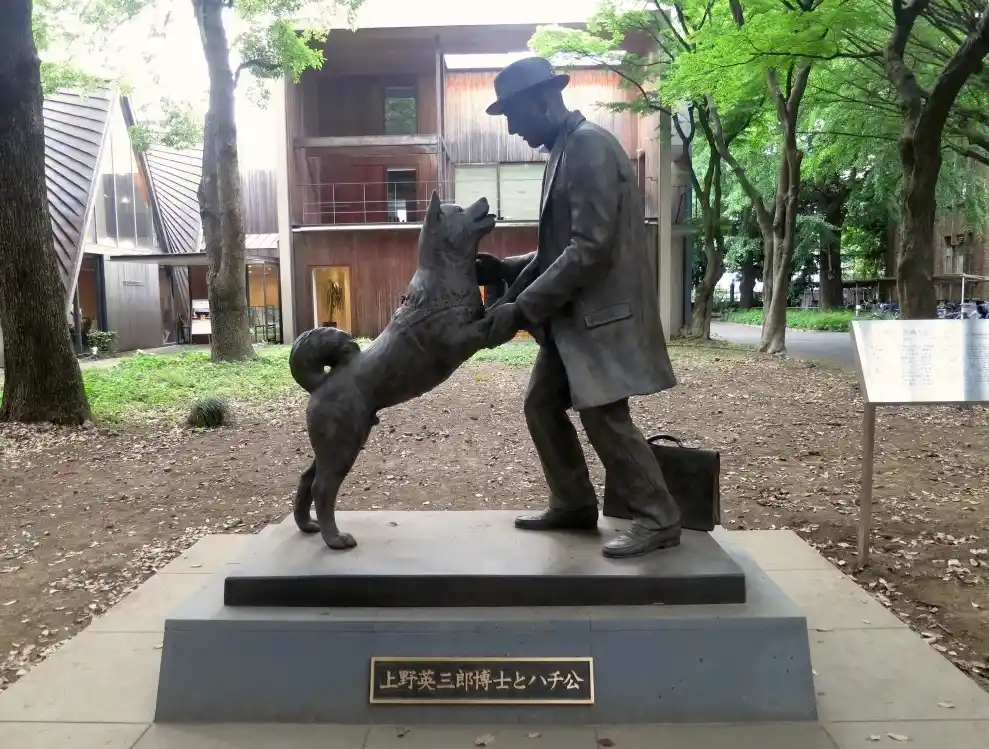
In 1934, a bronze statue of Hachikō was erected near Shibuya Station while Hachikō was still alive. He attended the unveiling ceremony himself, surrounded by admirers.
For the first time, an animal was honored nationally not for utility—but for emotional truth.
Hachikō’s Final Days
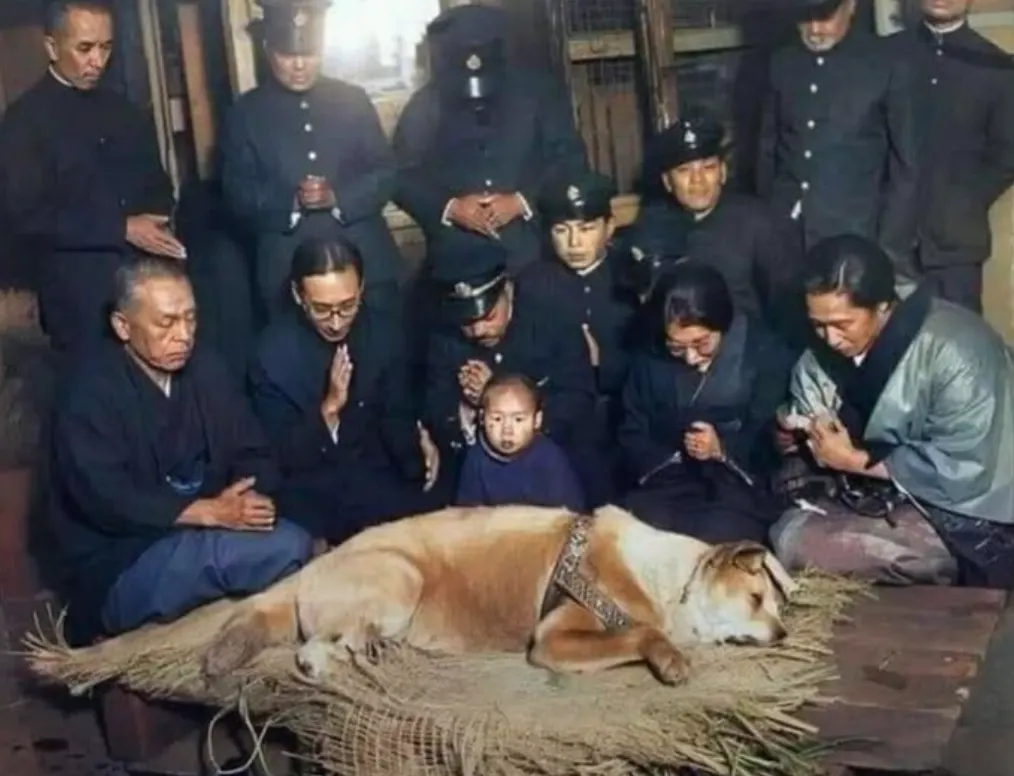
Hachikō passed away on March 8, 1935, at approximately 11 years of age.
An autopsy later revealed that he suffered from terminal cancer and parasitic infection—conditions likely worsened by years of exposure.
When news of his death broke, Japan mourned.
Flags were lowered. Newspapers published tributes. His remains were preserved and placed next to Professor Ueno’s grave at Aoyama Cemetery, finally reuniting them.
The Meaning Behind the Legacy
Why does Hachikō’s story endure?
Because it reflects something deeply human.
Hachikō did not understand mortality, social obligation, or symbolic reward. His loyalty was not transactional. It was not based on hope of return.
He waited because love, once formed, does not simply disappear.
In a world increasingly defined by speed, disposability, and short attention spans, Hachikō represents the opposite:
- Commitment without guarantee
- Presence without reward
- Love without closure
Hachikō in Modern Culture and Media
Hachikō’s legacy extends far beyond Japan.
- Statues now exist not only in Shibuya, but also in Ōdate and international memorials
- Films, including the internationally acclaimed Hachi: A Dog’s Tale
- Literature, children’s books, and academic discussions on human-animal bonds
- Digital storytelling, where Hachikō’s story thrives in short-form video and AI-driven narratives
Despite retellings, the core truth remains unchanged.
Scientific and Psychological Perspectives
Modern research in animal cognition supports what Hachikō demonstrated intuitively.
Studies show that dogs:
- Form deep attachment bonds similar to human infants
- Experience grief and loss
- Recognize routines and social absence
- Display prolonged stress when separated from primary caregivers
Hachikō’s behavior, once considered extraordinary, is now understood as a profound—but real—expression of attachment.
Conclusion: Waiting Became a Legacy
Hachikō never knew he would become a statue.
He never knew his story would travel the world.
He never knew his waiting would be remembered.
He simply waited.
And in doing so, he left humanity with a quiet reminder:
Some promises are not spoken.
Some love does not end.
And some waiting becomes a legacy.
FAQs
What is the true story of Hachikō?
The true story of Hachikō tells of a loyal dog in Japan who waited at Shibuya Station every day for nearly nine years after his owner died, turning his devotion into a lasting legacy.
Why did Hachikō keep waiting at Shibuya Station?
Hachikō continued waiting because of his deep bond with his owner. This loyalty, shown through daily waiting at Shibuya Station, is why the Hachikō true story became world-famous.
How long did Hachikō wait for his owner?
Hachikō waited for approximately nine years at Shibuya Station, a period that transformed his patience and loyalty into what many now call “waiting became a legacy.”
Is Hachikō’s story a real historical event?
Yes, the Hachikō true story is fully documented in Japan, supported by historical records, eyewitness accounts, and the famous Hachikō statue at Shibuya Station.
Why is Hachikō considered a symbol of loyalty?
Hachikō is considered a symbol of loyalty because his daily waiting, even after loss, represents unconditional devotion—making him one of the most famous loyal dogs in Japan and worldwide.




