


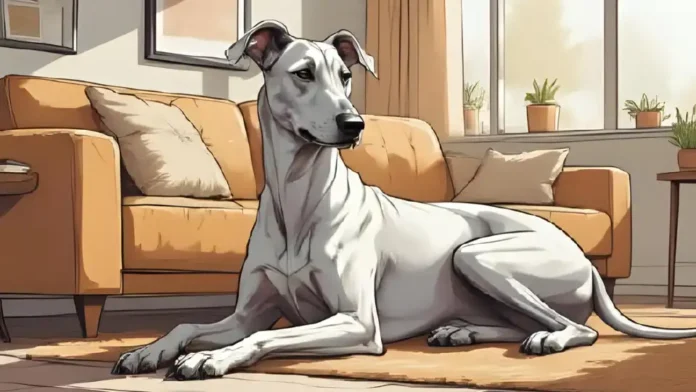
Despite their racing reputation, Greyhound dog breed is calm, quiet, and low-maintenance, making them one of the best dog breeds for apartment living. Their gentle nature and minimal exercise needs make them ideal for small-space dwellers.
DoggyZine.com
When you think of apartment-friendly dogs, the fast and sleek Greyhound might not come to mind. However, the Greyhound apartment dog is a surprisingly ideal match for urban living. With their calm demeanor, quiet nature, and low energy indoors, Greyhounds thrive in apartments, proving that looks—and reputations—can be deceiving.
Greyhound enthusiasts often raise eyebrows when we suggest these sleek racers as perfect apartment dogs. These amazing athletes can sprint up to 43 mph on the track, yet they’re actually relaxed “couch potatoes” who happily lounge around after brief exercise sessions.
These noble dogs trace their ancestry back 8000 years to ancient Egypt and possess traits that make them ideal for smaller spaces. A greyhound’s friendly and non-aggressive temperament fits perfectly in quieter living environments. These gentle giants need just an hour of daily activity to stay healthy and happy. Pet parents wondering about shedding will appreciate their hypoallergenic nature – their short, glossy coats need minimal grooming since they lack an undercoat.
This piece explores why these graceful racers make surprisingly excellent apartment companions. Their space-efficient lifestyle and quiet, sensitive nature helps them adapt well to calm environments. Let’s bust some common myths about these misunderstood athletes and show why a greyhound could become your perfect urban companion.
Table of Contents

Why Greyhounds are ideal for small spaces
Many people living in apartments shy away from large dogs, but greyhounds break this stereotype. These former racing athletes have special qualities that make them perfect companions in small living spaces.
Greyhound characteristics that suit apartment living
In stark comparison to this racing background, people call greyhounds “40 mile-per-hour couch potatoes” and with good reason too. These elegant dogs become peaceful companions who spend most of their day sleeping. Recent surveys show that 80% of greyhound owners would suggest this breed to people getting their first dog.
Greyhounds adapt well to homes of all sizes, from city apartments to suburban houses. They save space by naturally curling up in cozy spots to nap. These dogs might weigh 60-70 pounds, but they don’t need much indoor space.
So their relaxed personality makes daily care simple. Greyhounds have:
- Short coats that need minimal grooming
- Low shedding which means less cleaning and fewer allergens
- A peaceful indoor nature, choosing rest over activity
- Quick adjustment to different living environments
How their quiet nature benefits neighbors
A greyhound’s temperament is a vital apartment-friendly trait, especially their quiet nature. Most other breeds bark often, but greyhounds stay quiet. They might make sounds when excited (like your return home) or to express needs, but excessive barking isn’t part of their character.
Their gentle and calm personality means neighbors won’t hear noisy play or constant activity. Some greyhound parents say their dogs didn’t bark until almost a year after coming home! This peaceful behavior comes from their balanced personality, making them perfect apartment companions.
Why they don’t need a backyard
Big dogs needing yards is a myth that doesn’t apply to greyhounds. These dogs stay happy with daily walks and don’t need constant outdoor time. Most greyhounds only need one 30-minute walk each day, though some experts suggest two shorter walks for apartment life.
Between walks, these gentle giants love relaxing indoors. They prefer quick bursts of activity over long exercise sessions. All the same, access to safe areas for occasional running benefits them.
These dogs want to stay close to their humans—they prefer curling up next to you over exploring a yard alone. This people-loving nature makes them excellent companions in smaller homes.
Low noise, low fuss: a peaceful companion
Greyhounds surprise many first-time owners with their peaceful nature. Behind their racing background lies a calm companion that fits perfectly into apartment life.
Greyhound personality and barking habits
Greyhounds stand out from other dogs because they’re remarkably quiet. Most greyhounds rarely bark without good reason, which makes them perfect neighbors in apartments. These dogs love peaceful, relaxed spaces.
Their silence amazes many owners. One owner shared that getting their greyhound to make any noise was “a massive undertaking”. This quiet nature comes from their history as hunters who used sight rather than sound.
How they handle being alone during the day
These gentle dogs adapt well to spending time alone after they get comfortable in their space. Most feel at ease staying by themselves for 4-6 hours with the right preparation. They love human company though, and many owners say their greyhounds follow them everywhere like a “second shadow”.
Apartment residents will appreciate a dog that stays quiet while they’re gone. Each dog has its own personality – some might feel anxious when separated, especially those who just left racing life where they always had company.
Training tips for apartment manners
Positive reinforcement works best to train a greyhound for apartment living. These sensitive dogs don’t respond well to harsh training methods. Here are some useful strategies:
- Desensitization: Leave for short periods first, then slowly stay away longer
- Keep comfort items like favorite toys or cozy beds nearby
- Make crate training a positive experience (never use it as punishment)
- Try white noise machines or soft music to help them relax
- Set up daily routines to help them feel secure
Beyond simple commands, greyhounds living in apartments need to learn about stairs and glass doors. These smart dogs pick up new skills quickly, including house training. A well-trained greyhound brings peace to apartment living without the noise and chaos people often expect from big dogs.
Simple care routine for busy owners

Greyhounds stand out as one of the easiest dog breeds to care for. These elegant canines make perfect pets for busy apartment dwellers who balance work and social life, thanks to their simple care needs.
Grooming needs and shedding explained
These dogs keep themselves remarkably clean. Their short, sleek coats need minimal grooming. A weekly brushing session with a soft bristle brush or rubber curry mitt removes loose hair and helps spread natural oils that keep their coat shiny. These dogs barely have any “doggie odor” and only need baths when they get dirty—usually every 6-8 weeks.
These pets shed lightly. Their single-layer coat lacks an undercoat, which means they shed nowhere near as much as double-coated breeds. This feature makes them clean roommates in apartments. The shedding picks up a bit during seasonal changes as they lose their winter coat, so brushing becomes extra important then.
Essential grooming tasks include:
- Nail trimming every 2-3 weeks
- Weekly ear cleaning with a damp cloth
- Teeth brushing 2-3 times weekly with dog-specific toothpaste
Feeding and nutrition basics
We found that greyhounds do best with high-quality, protein-rich foods. Most experts suggest feeding adult greyhounds twice daily from raised food bowls that sit 20-30cm above ground. Apartment living requires careful portion control to prevent weight gain, especially with limited exercise opportunities.
Your greyhound needs food that lists real meat as its first ingredient. Premium kibble offers consistent nutrition while saving time and money. Adding fish oil supplements helps keep their skin and coat healthy.
Health considerations for apartment dwellers
The thin skin and coat of greyhounds make them sensitive to temperature changes—something apartment dwellers should watch closely. These dogs need warm coats outdoors during winter. Summer calls for dog-safe sunscreen on exposed areas to prevent sunburn.
Take your greyhound to regular vet check-ups, with special attention to dental care since they tend to have teeth problems. Their delicate skin makes them prone to small bumps or rashes that need watching.
These dogs ended up being perfect for apartment living because their care routine stays simple and straightforward—exactly what busy pet owners need in a companion.
What to expect when adopting a Greyhound

Adopting a greyhound can transform your apartment life. These gentle giants adapt surprisingly well to home life after their racing days, even in smaller spaces.
Understanding the miniature Greyhound dog breed vs. standard
People off the top of my head mix up Italian Greyhounds with standard Greyhounds. The difference is most important – standard Greyhounds reach 28-30 inches in height and weigh 60-100 pounds. Italian Greyhounds, which some people call “miniature greyhounds”, only grow to 12-15 inches and weigh under 10 pounds.
These breeds show different personalities too. Standard Greyhounds become relaxed and peaceful after enough exercise and love to snooze next to their owners. Italian Greyhounds pack “higher than average energy levels” and can switch “from lounge mode to running around mode” without warning.
Standard Greyhounds make better apartment companions because they handle solitude better. Italian Greyhounds struggle with “extreme separation anxiety” and might leave “presents” when alone.
How to prepare your apartment for a new dog
Your greyhound’s arrival needs some preparation:
- Secure your space: Clear dangerous items and ensure balcony railings exceed 1.5 meters
- Set up a cozy sleeping spot with soft bedding in a quiet corner
- Pick a feeding spot that you can clean easily
- Install baby gates where you need to restrict access
House-trained Greyhounds might have accidents at first, so keep valuable items off the floor. Note that stairs training is a vital step—some Greyhounds need time to learn about steps.
Common myths about Greyhounds debunked
Greyhounds need minimal exercise—”a short daily walk and some play time is usually enough”. People call them “45-miles-per-hour couch potatoes” because they sleep 18-20 hours each day.
These dogs don’t need big backyards. They “don’t usually take up any more room than other dogs” in apartments. Their quiet nature makes them excellent neighbors since they “tend not to bark”.
These exceptional pets stay healthy with few genetic issues, unlike many large breeds. Their simple care needs make them perfect apartment companions.
Conclusion
Greyhounds break all the rules when it comes to apartment pets. These elegant racers become amazingly calm companions the moment they step into your home. Most people think these graceful athletes need tons of exercise and space – but that couldn’t be more wrong.
These dogs are some of the quietest large breeds you can find. They rarely bark, which makes them great neighbors. Their relaxed personality brings peace to even the tiniest apartments. Their coats barely shed and they’re super easy to groom – a perfect match for busy apartment dwellers who want a fuss-free pet.
You might think twice about getting a greyhound if you’re new to dog ownership. Many people assume big dogs always need huge backyards and constant attention. The truth? These gentle giants would rather lounge next to you than run around outside alone. They adapt beautifully to any living space, and their space-saving nature really shines in apartments.
Taking care of a greyhound’s health is pretty straightforward compared to other purebreds. They just need protection from extreme weather, and their daily care routine stays simple. The adoption process usually goes smoothly when you know what to expect.
These dogs are something special. You get the majestic look and gentle nature of a large breed without the usual drawbacks – no excessive exercise needs, minimal barking, and they don’t need much space. Looking for a peaceful, easy-to-care-for roommate that fits apartment life perfectly? A greyhound might be your unexpected perfect match. These “45-mile-per-hour couch potatoes” prove that sometimes the most surprising choices turn out to be the best companions.

FAQs
Are Greyhounds good dogs for apartments?
Yes, Greyhounds are excellent apartment dogs due to their quiet temperament and low indoor activity levels. This makes the Greyhound apartment dog a top choice for urban dwellers.
Do Greyhounds need a lot of exercise in small spaces?
No, despite being former racers, Greyhounds are surprisingly low-energy indoors. A few short walks daily are enough for this quiet dog breed to stay healthy in a small apartment.
Are Greyhounds loud or prone to barking?
Greyhounds are one of the most quiet dog breeds. They rarely bark, making them ideal for shared apartment buildings with noise restrictions.
What makes Greyhounds suitable as low energy apartment dogs?
Their laid-back nature, short bursts of energy, and love for lounging make Greyhounds low energy apartment dogs, perfect for people who prefer a relaxed companion.
Can a Greyhound live happily in a studio or one-bedroom apartment?
Absolutely. A Greyhound apartment dog adapts well to smaller homes as long as they receive regular walks and affection. They are clean, polite, and easy to care for.
“Greyhound Graphic Tee for proud dog lovers.”





